

Request Quote
Maintaining municipal water infrastructure is a relentless task. Water distribution managers and utility superintendents constantly face the pressure of keeping the taps running while addressing aging pipes, sudden leaks, and necessary system upgrades. When a critical repair is needed on a large-diameter transmission main, shutting down the entire system is rarely a viable option. It disrupts service to thousands of residents, hospitals, and businesses, not to mention the potential fire protection risks.
This is where line stopping becomes an indispensable tool in a municipality’s maintenance arsenal. Line stopping isolates specific sections of a pipeline while keeping the rest of the system live and pressurized. For large-diameter mains—often ranging from 16 to 60 inches or more—the stakes are high, and the procedure requires precision, specialized equipment, and deep technical expertise. If you’re curious what goes into line stopping large-diameter water mains, we’re here to cover the basics with you.
Line stopping serves as a temporary valve, inserted under pressure, to stop the flow of water in a selected section of pipe. This capability changes the dynamic of water main maintenance entirely. Instead of notifying the public of a service outage and dealing with the subsequent backlash and logistical nightmares, utility teams can work quietly and efficiently.
Several scenarios dictate the need for this specialized procedure. Emergency repairs are the most obvious. If a 36-inch concrete pressure pipe develops a leak, you cannot simply turn it off without affecting a massive service area. Line stopping allows you to isolate the break and handle it accordingly.
Planned upgrades also benefit. Maybe you need to install a new hydrant, replace an aging gate valve that no longer seats properly, or relocate a section of main due to bridge construction. Line stopping facilitates these capital improvement projects without interrupting the daily lives of your constituents.
The primary benefit is continuity of service. By avoiding a complete shutdown, you eliminate the need to issue boil water advisories that typically follow a depressurization event. This saves time, money, and public trust.
Additionally, line stopping is cost-effective. While the service itself carries a cost, it pales in comparison to the expenses of draining thousands of gallons of treated water, the labor required to notify customers, and the potential liability from service interruptions to critical facilities.
Furthermore, line stopping enhances the long-term reliability of your infrastructure. It allows you to replace faulty valves or sections of pipe proactively rather than reactively, extending the overall lifespan of the water main system.
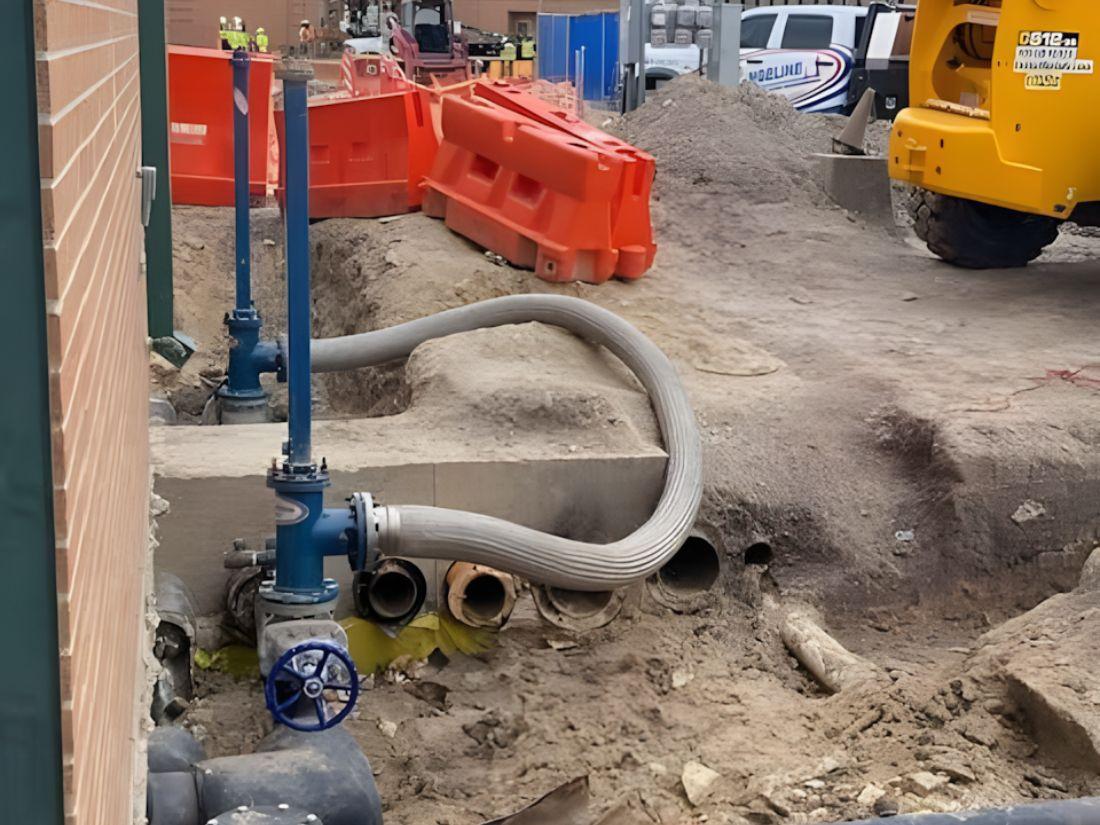
Due to their sheer size, working on transmission mains is fundamentally different from servicing small distribution lines. The larger scale creates unique complexities that demand rigorous planning and execution.
Large-diameter mains often operate at higher pressures to push water across vast distances. The thrust forces involved are immense. When you cut into a 48-inch pipe under 100 PSI, the forces acting on the equipment and the pipe itself are substantial. Specialized thrust restraint is critical to prevent the line stop housing or the pipe itself from shifting during the operation.
Municipal systems are often a patchwork of history. You might encounter Ductile Iron, Cast Iron, PVC, Asbestos Cement (Transite), or Prestressed Concrete Cylinder Pipe (PCCP). Each material reacts differently to tapping and stopping forces. PCCP, for instance, requires specific care to avoid damaging the prestressing wires, which could lead to catastrophic failure. Knowing exactly what material is in the ground—and its condition—is a prerequisite for success.
The machinery required to stop a 42-inch main is heavy and requires significant excavation space. You aren’t just digging a small pit; you are excavating a large trench that must be shored properly to protect workers and support the weight of the tapping machine and line stop actuator. Maneuvering this equipment in urban environments with existing underground utilities adds another layer of difficulty.
Attempting these repairs without professional intervention or with undersized equipment is a recipe for disaster. A failed stop could result in uncontrollable flooding, massive property damage, and severe injury.
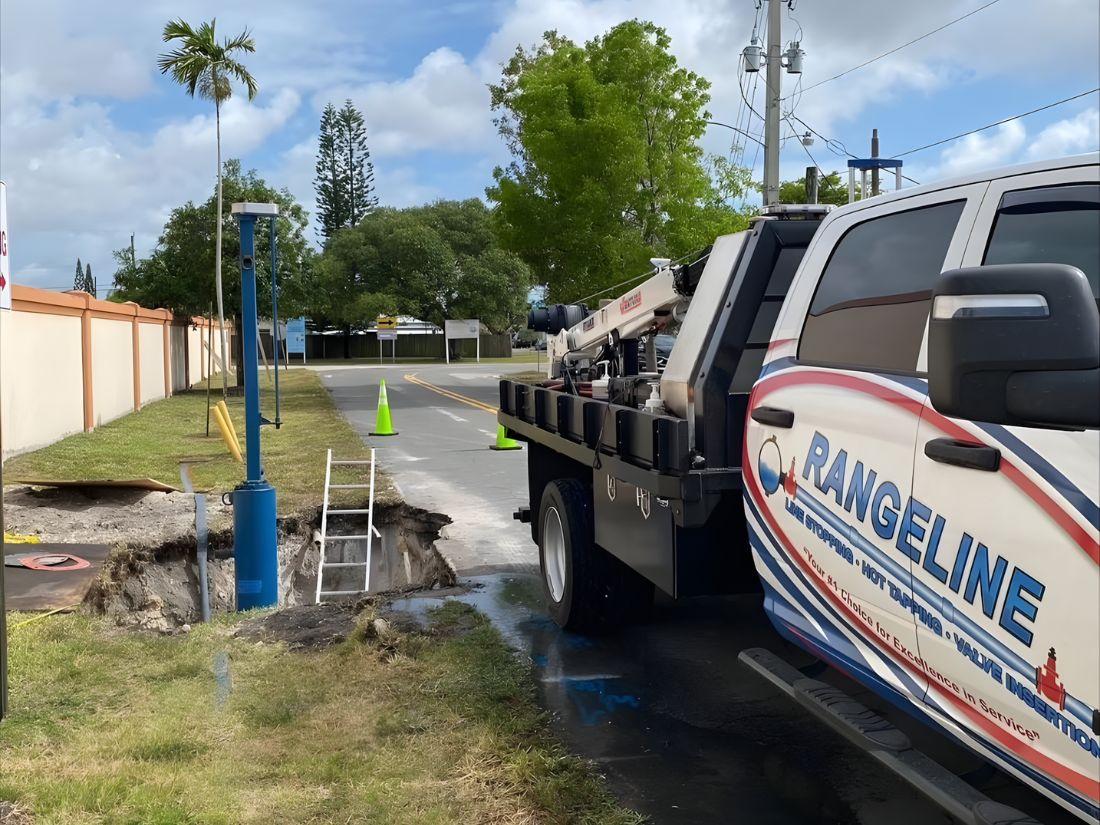
Because of all of this, executing a line stop on a large-diameter main must be a calculated, multi-step process. Teams that implement it follow a strict protocol to guarantee safety and system integrity. Still, it’s a good idea to understand the line stopping procedure for large-diameter water mains before hiring qualified line-stop contractors for the job.
The process begins long before any digging occurs. The process starts with a thorough review of system maps and as-built drawings. It is necessary to verify the pipe material, outer diameter (OD), operating pressure, and flow rates. Teams must also assess site conditions before getting started, including available space for equipment and the presence of conflicting utilities. This information is essential for selecting the correct tapping sleeve and line stop head.
Once line stoppers have collected the necessary data, they fabricate or select the appropriate fitting for the job. For many large mains, a custom-fabricated steel tapping sleeve is required. The type of line stop head is then determined—typically a folding head or a pivoting head that professionals can insert through a smaller tap to block the larger line. They then generate a detailed safety plan and lift plan, addressing shoring requirements and crane placement.
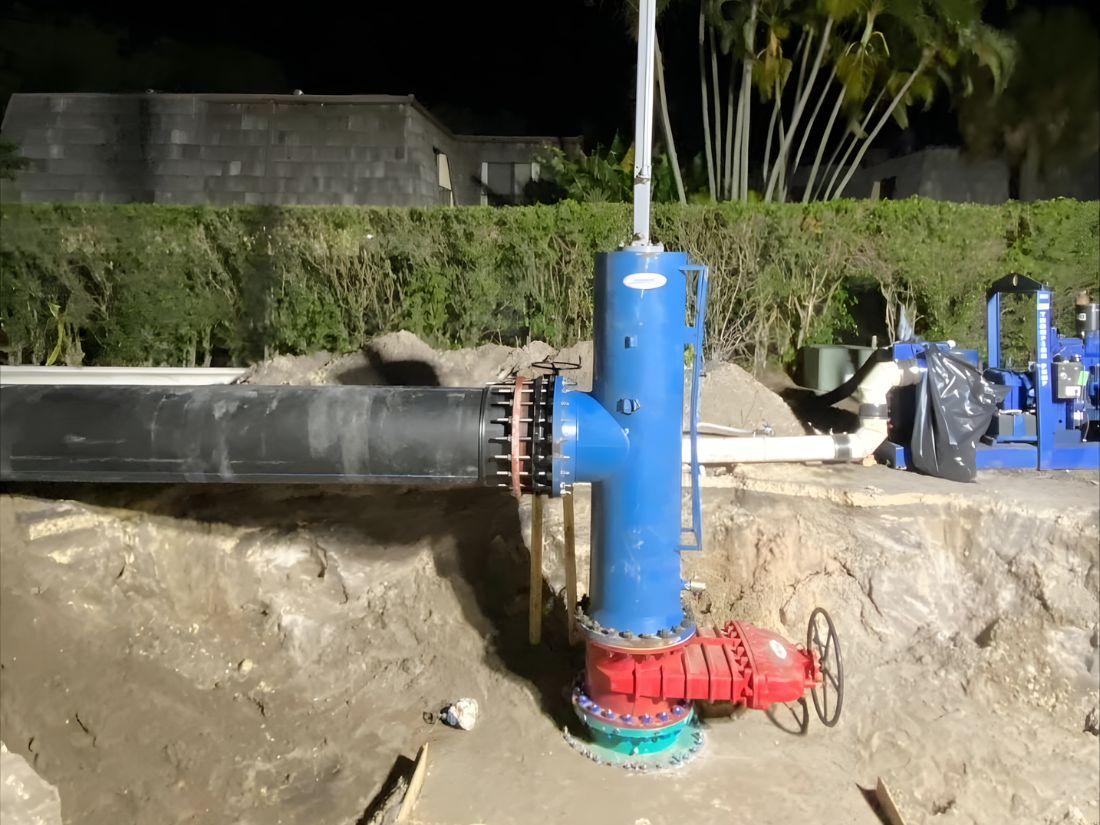
Field execution starts with exposing the pipe. Teams must thoroughly clean the pipe surface to guarantee a tight seal. They then install the tapping sleeve and pressure-test it to verify integrity. After mounting a temporary valve to the sleeve, the tapping machine is attached.
With the equipment in place, the professionals can then perform the “hot tap” or “wet tap” procedure. The machine cuts a hole in the pipe wall while it remains under pressure. They retract the coupon (the cut piece of pipe) and close the valve, ensuring no water is lost during this phase.
Next, teams will remove the tapping machine and mount the line stop actuator to the valve. Once they open the valve, they’ll insert the stopping head into the main.
Inside the pipe, the head expands or pivots to block the flow. A rubber sealing element creates a drop-tight seal against the interior of the pipe. With the flow stopped, the line stoppers will drain the downstream section, allowing repair crews to safely proceed with the necessary repairs or valve replacements.
After repairs are complete, it’s time to equalize the pressure on both sides of the line stop. The head is retracted through the valve, and the valve is then closed. The pros will then install a completion plug into the neck of the tapping sleeve, which allows removal of the temporary valve and line stop actuator.
A blind flange is bolted onto the sleeve to permanently seal the access point. This access point can also be used for future maintenance if needed. After backfilling the excavation site, the system returns to regular operation—often without the public ever realizing a major intervention has even occurred.