

Request Quote
Material selection drives the performance of any industrial piping system that handles corrosive media. When a line carries aggressive chemicals, the material has to do more than resist basic chemical attack. It also has to withstand the actual temperatures, flow conditions, and operating demands of the system.
That’s what makes industrial piping material selection more involved than simply choosing the most corrosion-resistant option available. To ensure you make the correct choice of industrial piping material for corrosive media, we’re here to guide you in the right direction.
The first step is understanding the media in practical terms. Saying a line carries sulfuric acid, sodium hypochlorite, or brine doesn’t tell you enough, because concentration, contamination, and temperature can all change corrosion behavior. A material that performs well in one range may fail quickly when those variables shift.
You also need to consider how the process runs. Batch cycles, startup spikes, shutdown conditions, and cleaning procedures can expose the pipe to conditions more aggressive than those of steady-state operation. Flow matters too, since high velocity can increase erosion-corrosion while stagnant areas can promote pitting or crevice attack.
Corrosion resistance is the starting point, but it isn’t the whole decision. A piping material must also withstand pressure, thermal cycling, support loads, vibration, and the physical stresses of plant operation. If a material resists the media but cracks, deforms, or creates fabrication problems, it still isn’t the right choice.
That’s why selection has to balance chemical performance with mechanical performance. Metallic systems often offer strength and temperature capability, while nonmetallic options may provide stronger chemical resistance in some applications. The best answer depends on where those demands meet in the actual application.
Several material categories appear repeatedly in corrosive piping systems, but you shouldn’t consider any of them as a default option for all use cases. Each option solves a different problem and introduces distinct constraints. The goal is to match the material to the service instead of reaching for the most familiar answer.
Stainless steel is often the first option teams consider because it’s common, recognizable, and relatively easy to fabricate. In moderate corrosive service, it can be a practical choice that balances cost and mechanical strength. Still, that doesn’t make it a universal answer.
Chloride-bearing media, stagnant conditions, and higher temperatures can create major problems for standard stainless grades. Pitting and crevice corrosion may appear long before general wall loss becomes obvious, which is why grade selection matters so much. If stainless steel is under consideration, the alloy has to match the actual chemistry and operating conditions.
Duplex and higher-alloy stainless materials offer a useful step up when standard stainless options sit too close to the failure line. They can improve resistance to localized corrosion while also delivering strong mechanical properties. In the right service, that combination can extend life without forcing a move into a much more expensive alloy family.
Even so, they should solve a specific problem rather than serve as an automatic upgrade. Higher material cost and tighter fabrication requirements can add complexity fast. If the process doesn’t truly demand that performance, the added expense may not return much value.
Nickel alloys usually enter the conversation when the media is especially aggressive or when temperature and chemistry shift enough to challenge lower-alloy materials. They can perform very well in severe service, particularly when both corrosion resistance and elevated-temperature capability matter. In those cases, they may provide the most dependable long-term option.
Their cost changes the equation. Nickel alloys make sense when they address a defined risk that other materials can’t manage well, but they’re easy to over-specify. When that happens, project costs rise quickly without a matching gain in reliability.
Nonmetallic systems and lined piping deserve serious attention in corrosive service. Materials such as CPVC, FRP, and PTFE-lined steel can outperform metallic options in the right chemical environment and may reduce the need for high-cost alloys. That makes them attractive when chemical resistance drives the decision.
They still come with limits that need careful review. Temperature range, permeation, support spacing, and field handling can all affect long-term performance. A lined or nonmetallic system can work extremely well, but only when the design accounts for those mechanical and installation realities.
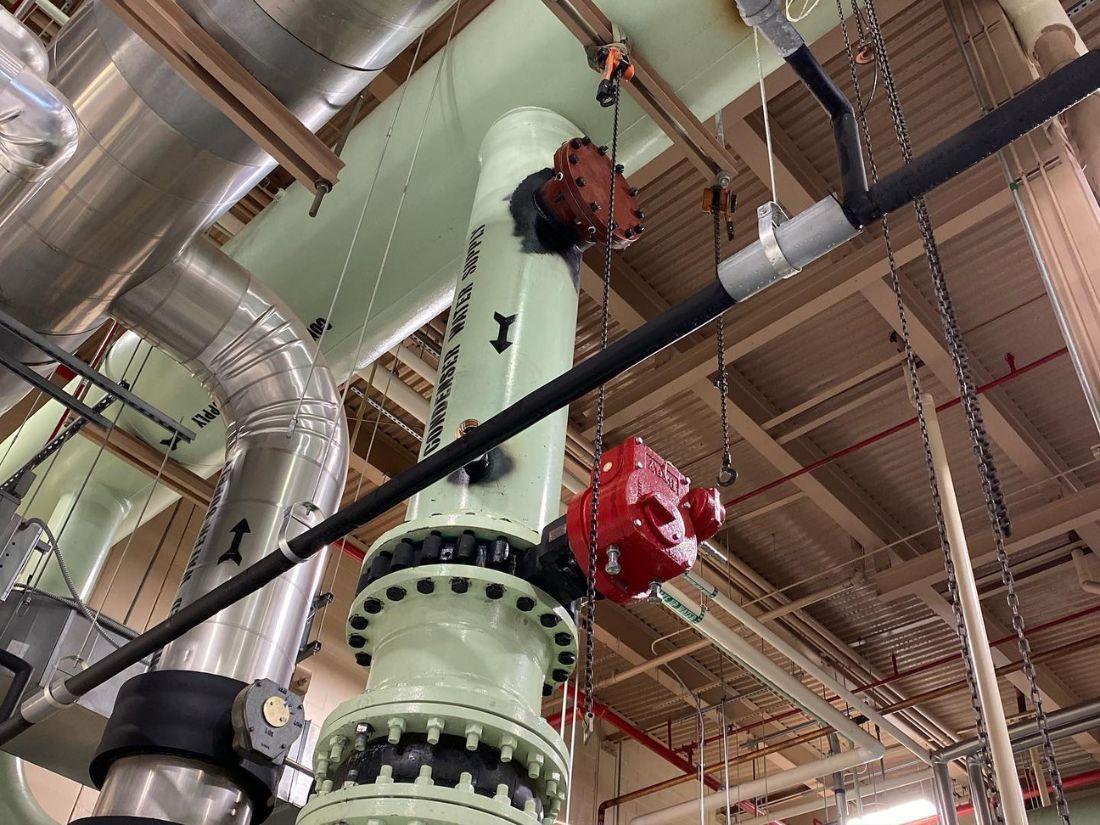
A material can look perfect on a chart and still create trouble in the field. Welding methods, filler selection, bonding procedures, and flange assembly all affect long-term corrosion performance. In many systems, failure starts at joints, transitions, or disturbed areas before straight runs show obvious damage.
That’s why fabrication requirements should influence selection early. If a material requires specialized welding procedures or strict installation controls, the project team must execute those steps consistently. Of course, don’t forget about maintenance; difficult repairs, long lead times, or rare expertise can turn a technically sound material into a practical burden.
When selecting an industrial piping material for corrosive media, you must remember that it rarely attacks every part of a system in the same way. It tends to concentrate where flow changes, where solids settle, where chemicals enter the line, or where dead legs trap aggressive media. If you apply a single material spec to the entire run without looking more closely, you may miss the locations most likely to fail first.
Elbows, reducers, branch connections, low points, and injection areas often need closer review than straight pipe sections. In some cases, those spots may need a different material, added lining, or a design change that reduces turbulence and concentration effects. That targeted approach usually works better than overbuilding the whole system.
Initial material cost matters, but it shouldn’t make the decision by itself. In corrosive service, a cheaper material can become the expensive option once leaks, downtime, cleanup, and labor start piling up. What looks efficient during procurement may create much higher operating costs after startup.
That’s why lifecycle value should guide the final selection. You need to weigh purchase price against service life, maintenance burden, repair complexity, and the consequences of failure. When you evaluate the whole picture, the right material choice becomes much easier to justify and much more likely to hold up over time.
Even if you do everything right, that won’t eliminate the potential of corrosion risk over the life of a system. Given enough time, aggressive media and localized wear can still create weak points that need attention before they turn into leaks or unplanned downtime.
That’s why many facilities rely on industrial piping services to identify problem areas and make repairs that help extend system life. In corrosive applications, that kind of repair support plays an important role in keeping systems operating safely and avoiding more disruptive failures.